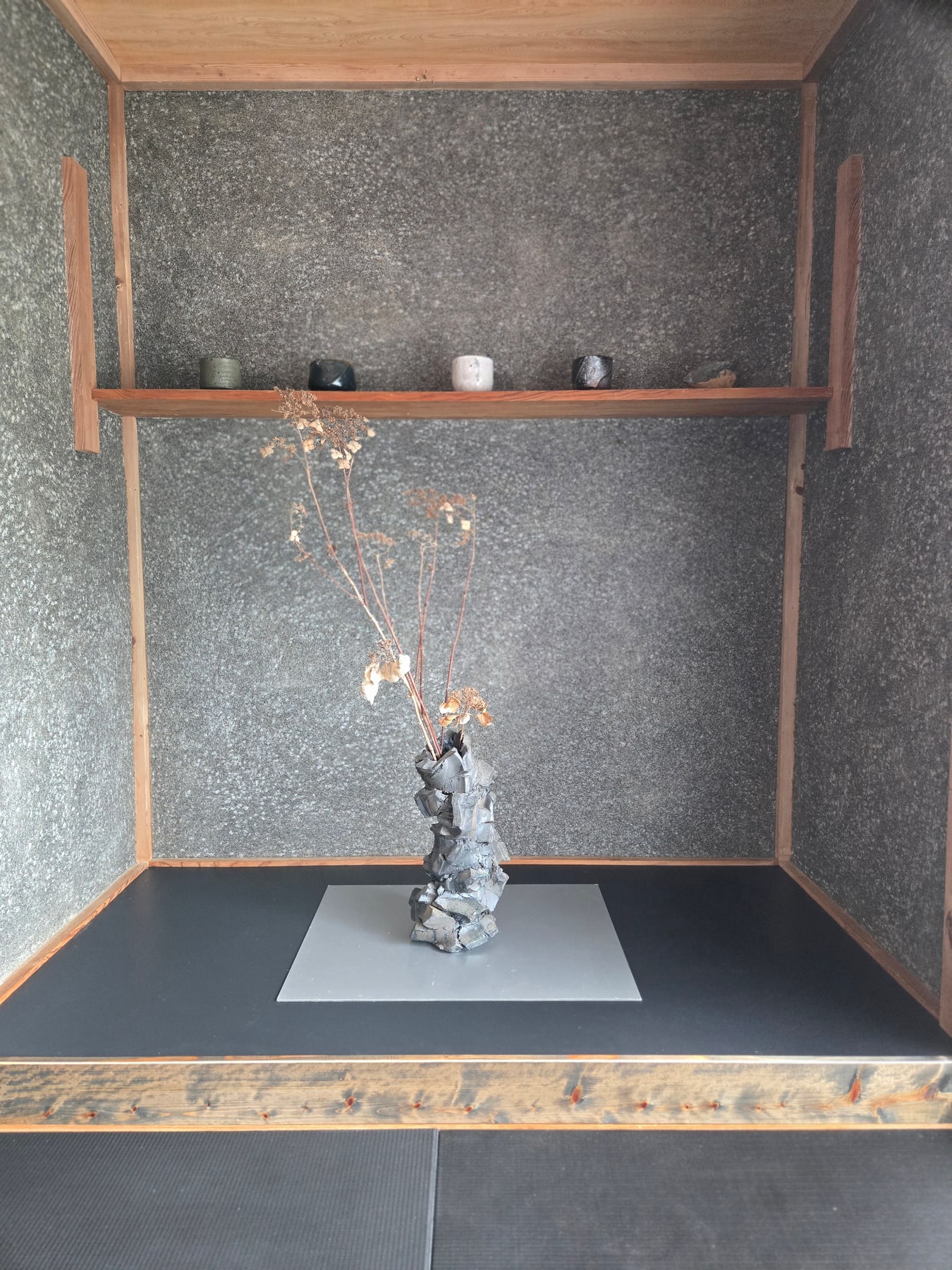
Working against the wheel — Shozo Michikawa
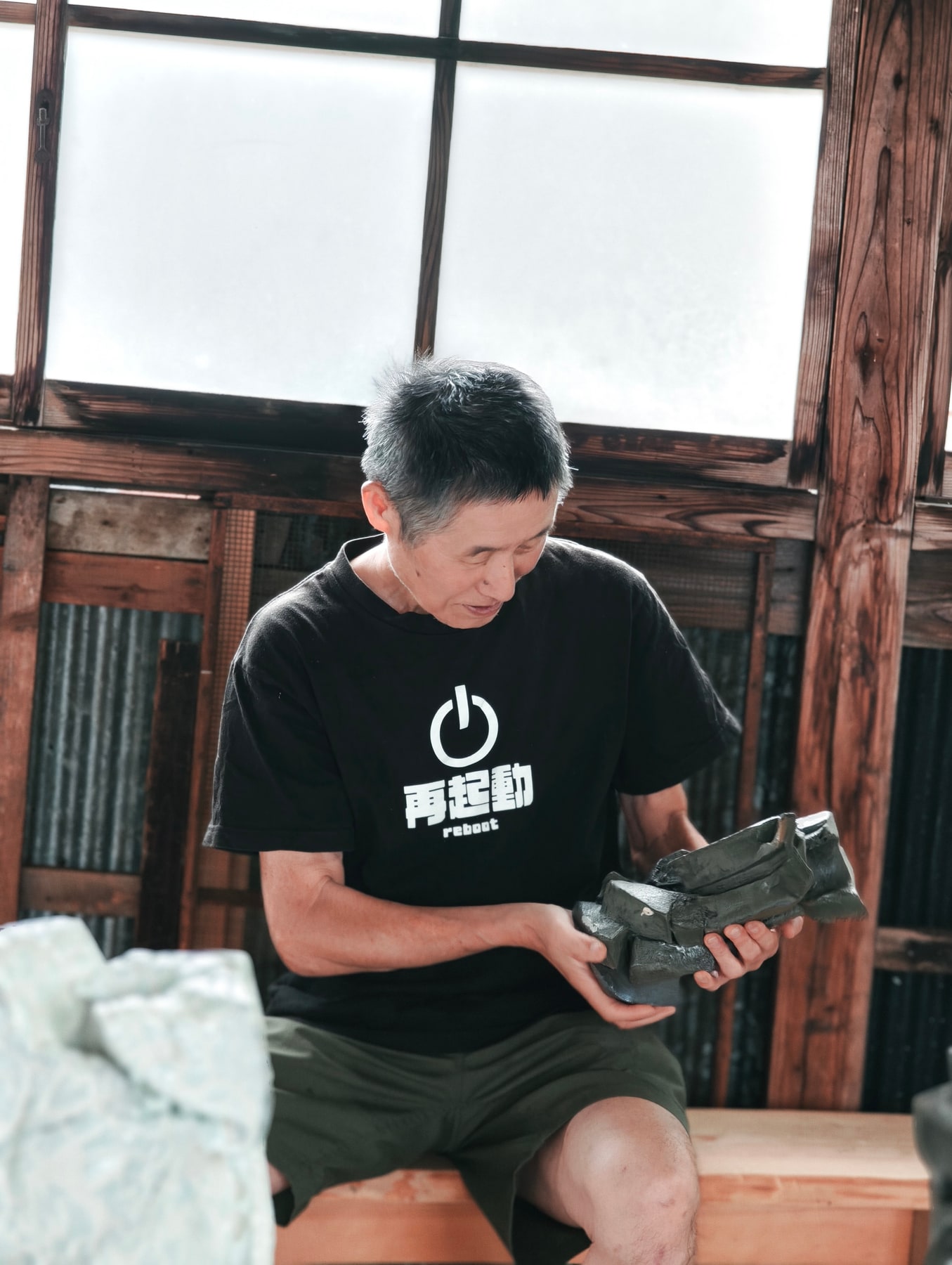
A potter’s wheel gives clay a turning rhythm. Shozo Michikawa uses that movement, then pushes against it, twisting the body until the round vessel opens into folds and ridges. You can still follow the opening in these sculptures, although the clay around it has changed direction several times.
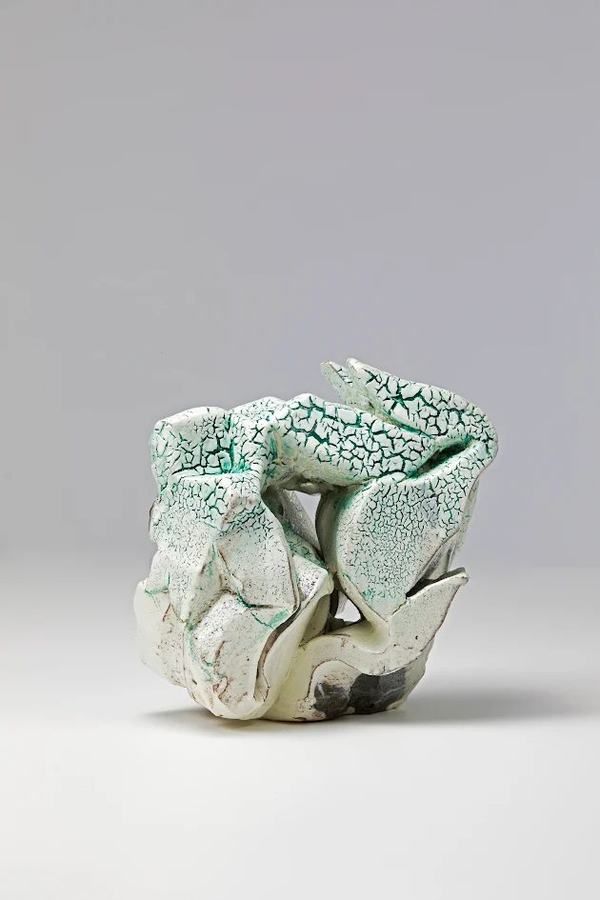
Michikawa describes working against the wheel’s rotation through pressure and twisting. It helps explain why the folds seem to travel through the whole pot. A crease rises from the base, spreads into a broader surface and gathers again near the mouth. The changes run through the form itself.
Kohiki Sculpture is low and broad, with dark lines breaking across a pale, greenish surface. Look around the rim and the outline becomes much more uneven than it first appears. Some sections rise quite sharply; others turn back towards the opening. The quieter foot gives all that movement somewhere to settle.
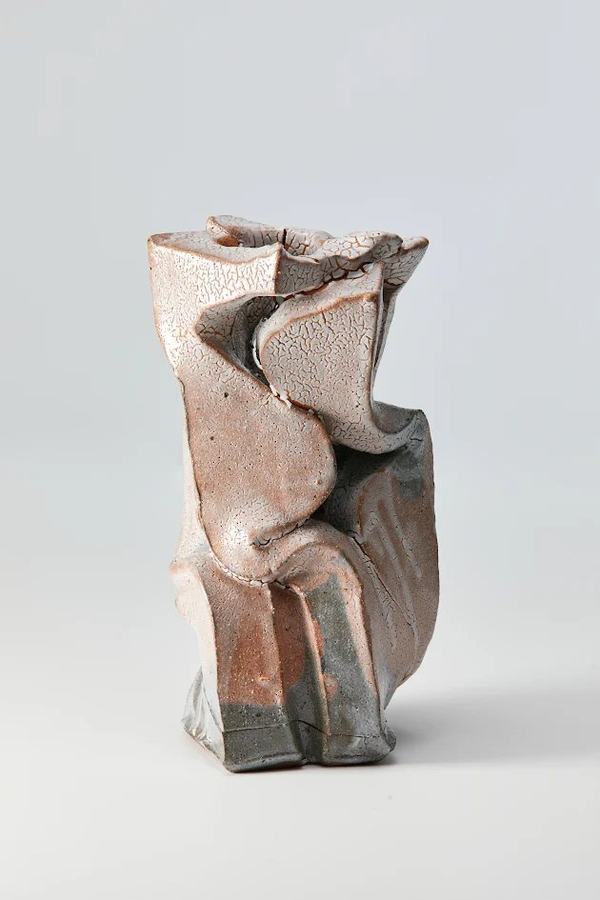
The taller Benikohiki Sculpture takes a different direction. Pink and grey surfaces meet along upright ridges, drawing attention up the body before it turns around the mouth. Seeing the two together makes the range of this method apparent. The same opposing movements can produce a spreading vessel or a much narrower, more upright form.