Interview with Owner and Founder of Mister Freedom, Christophe Loiron
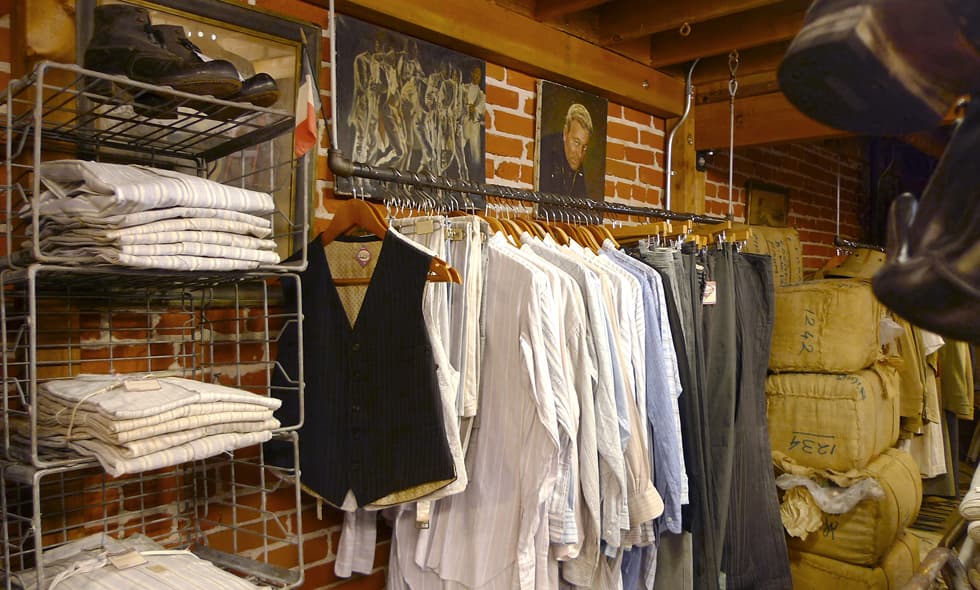
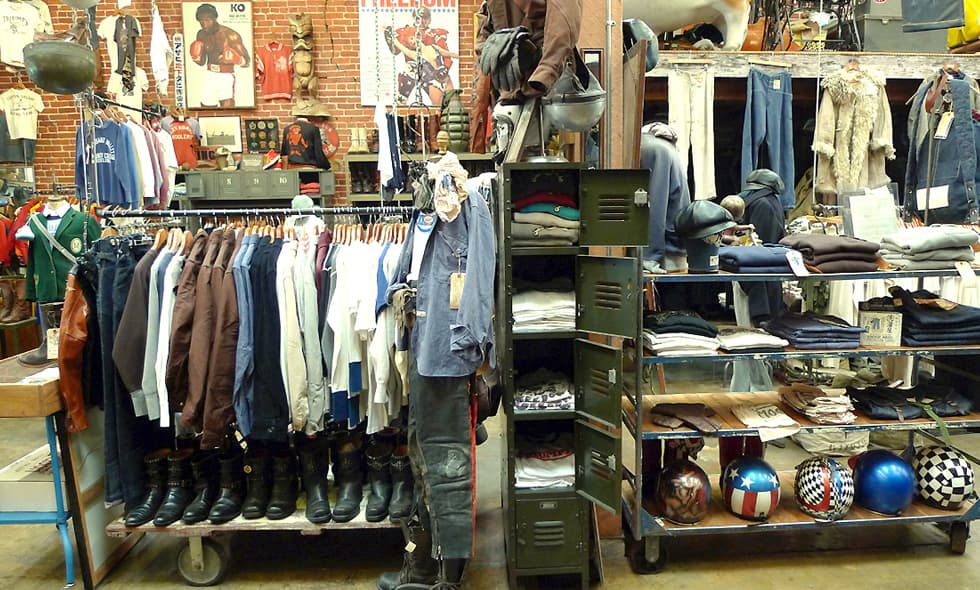
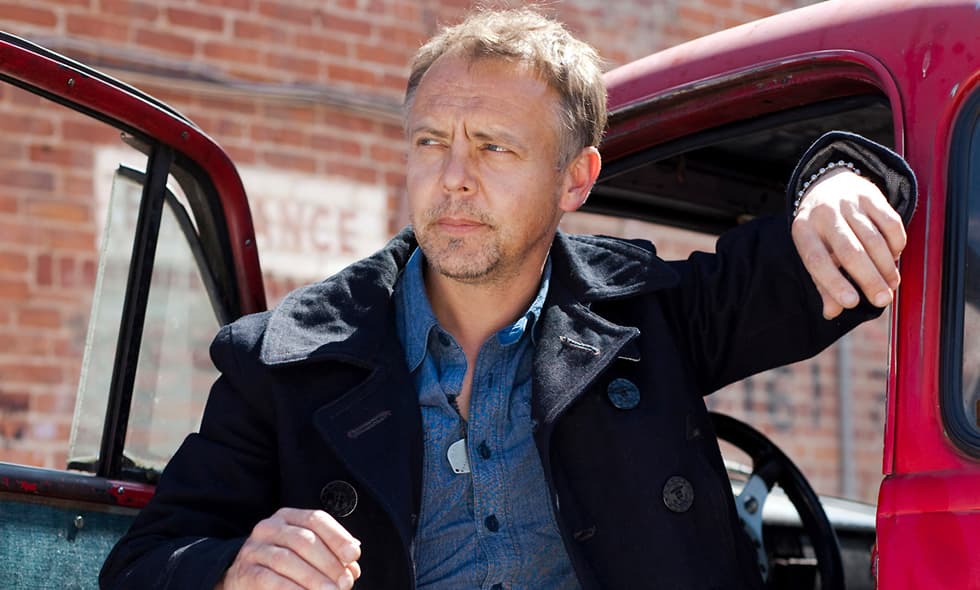
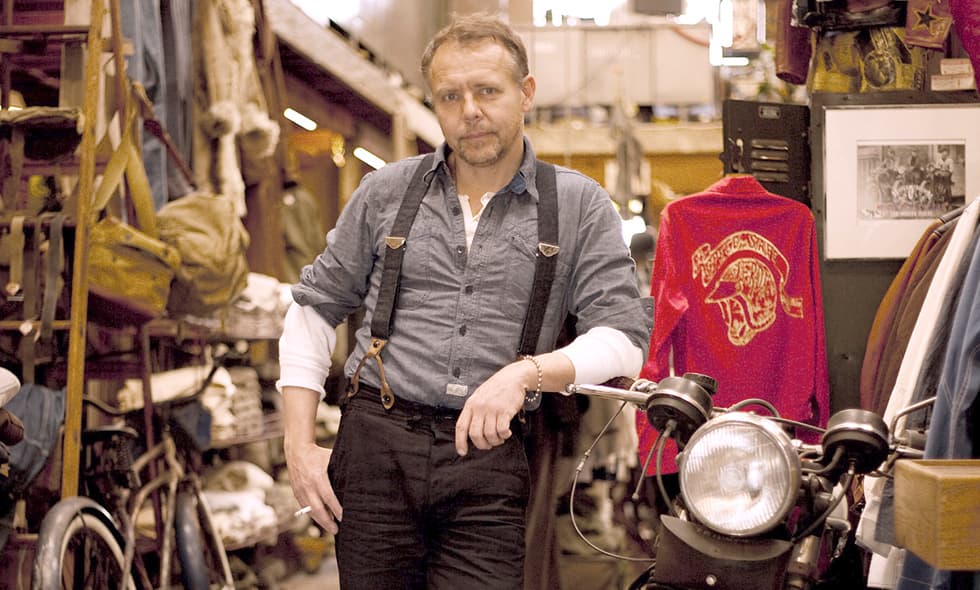
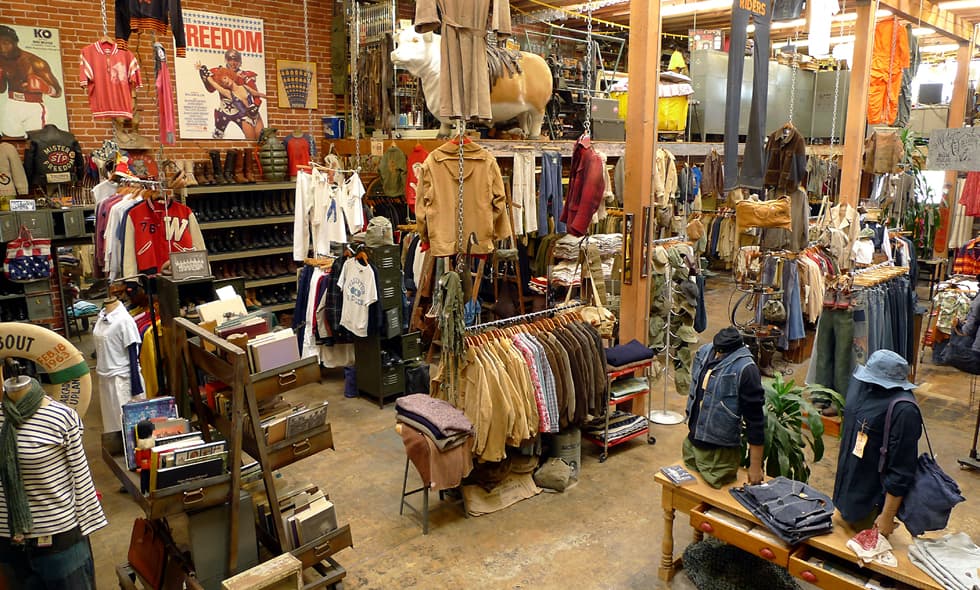
Mister Freedom is a retail space/design studio created by Christophe Loiron, located in Hollywood, CA. The shop is full of vintage clothing, footwear and accessories for both men and women from the 1850′s to the present day. Christophe also owns a private creative space and prototype room upstairs from the shop, a place where all his top secret designs get put through their paces.
His clothing label Mister Freedom, a collaboration with Japanese manufacturing experts “Sugar Cane Co” (of Tokyo based “Toyo Enterprises”), has really come on leaps and bounds, with a lot of popularity now being seen in the menswear market.
So we decided to interview Christophe and get some background information on his life and also Mister Freedom as a label and design studio.
What prompted you to start the retail space/design studio?
I have issues with running with the pack and I have always needed personal freedom. So owning my own business was more about survival and being the captain of my own ship than about a wise financial venture.
At a very early age I was making things out of things. Music out of a guitar, new out of old and so on. It just turned out that i make a living out of it now. But there was definitely no master plan.
What are the plus sides of being located in Hollywood?
This is where I ended when I left France 21 years ago. For an immigrant, America was challenging but yet so inspiring. I had zero work experience when I hit Hollywood, so I had to learn the ropes here. Any place becomes what you make of it. There are enough people to meet and things to do so that you can’t blame a city for being a ball and chain. If certain aspects of a place do not fit my expectations, then i don’t indulge in them.
Yes, LA is (was) Ed Hardy clothes HQ, but there are also a lot of interesting people, artists, creators that don’t get press but make Hollywood.
Do you ever get anyone spying on your products? I know there is a “No Photo” policy.
From the early days of Mister Freedom, a large part of the clientele has been design teams from the big garment companies. They usually don’t like to be mentioned. They helped me stay alive all along, so I will always be thankful. They were there when no one else cared.
The photo thing is often an Italian “designers” specialty. They hide (sometimes in the dressing room) and shoot photos of graphics, clothing or label details for inspiration or plain knock-off. Much cheaper than buying.
I have gotten in a few name calling sessions here, and turned Joe Pesci on a few. I never shoot things in stores. Unethical and unfair to the guy who pays for his stuff. But it’s all good, they can “steal” what I make, but they can’t get in my head.
How do you go about finding all the inventory for the store? I’m certain it’s not the same as doing a trade show round each season?
I can’t really pick up the phone or order on line for 1890′s indigo linen Yakuza capes, nor a 1920′s fabric French swatch book indeed! There are footwork, expenses and time involved in finding good and interesting things.
Mister Freedom® has the reputation of being expensive. But after 3 weeks on the road with air/hotel/car/shipping, it adds up. I’d be more affordable if I did my buying in Trade Shows for sure. But that would bore me to death, and I would carry what everyone else does.
Could you explain a bit about Mister Freedom as a clothing label. What’s the concept?
The urge I have to make things combined with the realisation that I didn’t see what I wanted to see around me evolved into MF® as a clothing label. I design my clothes according to what period I am into, fluctuating according to movies I watch, old photos I find or historical facts I come across. I don’t do ‘costumes’ or replica though.
An old 1930’s photo album will just be ground for a little scenario, give life to fictitious characters, and I’ll imagine the clothes accordingly. I don’t do clothes because of a trend, nor do I follow movements or advices.
If I do it right, the MF collections are just like classic movies – they last. I often talk bad about “fashion”, not only it’s victims but also those involved in making it. So it’s ironic that i’m in the mist of it because of what I do.
But go to your local music store. Lady Gaga and Django Reinhardt both have a section. Different audience though. I am comparing myself to neither , just saying that it’s not what you do, it’s how you do it. Django does Music.
Are there are stand-out items that you’re developing at this moment in time?
The two previous MF® original scenarios where a 1930′s Naval story followed by a 1930′s to 60′s Motorcycle Club story I made up. They both tapped into Military and American workwear, which have been big influences since I was a kid. Since everyone is on that now, I did a 180. Not repudiating that background, but i wanted to lose the pack.
I went back to early images and stories about early Parisian gangs called the “Apaches” I had read about. Those young hoodlums were Paris biggest threat during the Belle Epoque. There is a lot of information on the net now, but R&D was a bit tricky when I started working on that concept. It evolved in a mixture of Dandy gear, French inspired fabrics, patterns and silhouettes. It still ties in with work wear, but with a European approach. I mixed it all up, made it historically plausible and wearable.
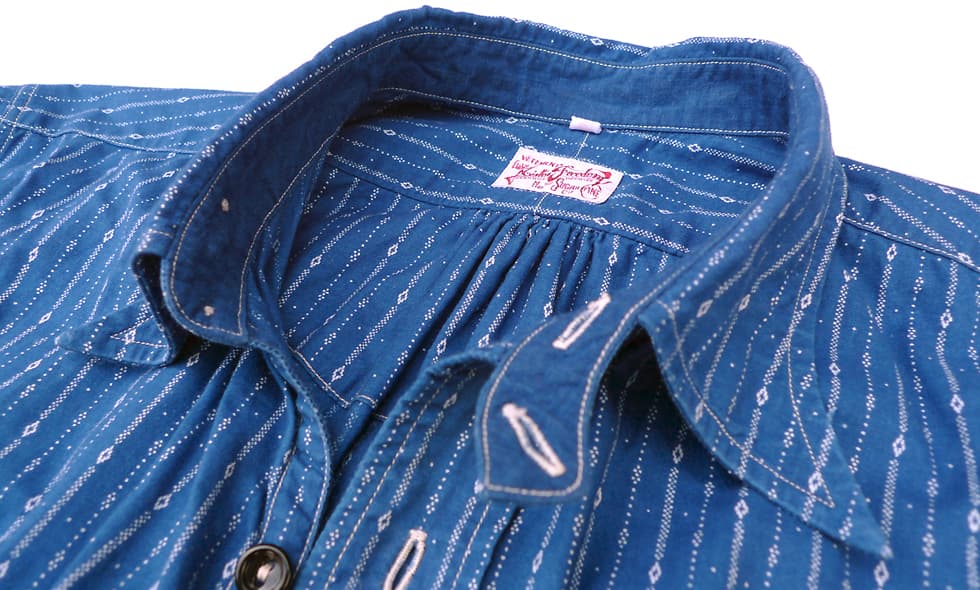
The collection features indigo “métisse” fabrics, woven “gangster” stripe slacks and waist coats, calico print shirting and other goodies. Each piece can still be mixed with a pair of jeans or a white T-shirt though. I am not big on the “total look”.
“ If I do it right, the MF collections are just like classic movies – they last …
Why do vintage items inspire you? Have you always been into clothing?
I don’t like the befouled term vintage, but I also think that everything has already been done, nothing new under the sun. Some might want to make clothes out of plastic or use dog poop to paint on canvas. I pass. I get inspired by things that have been proven right and have a soul.
I used to play a lot of music, stay up all night to record original songs on an old 4 tracks. Old stuff. Rockabilly, jazz etc… Listening to Gene Vincent while wearing disco pants was not an option, so all I wore was 40′s 50′s vintage stuff. Clothing and music went together for me. Then i realized that it was easier to have Elvis’ shirt than his talent, so I guess that’s why I make clothes …
You have a private creative space and prototype room in your studio, why is this important to you? Could you also give us an insight into what goes on in there?
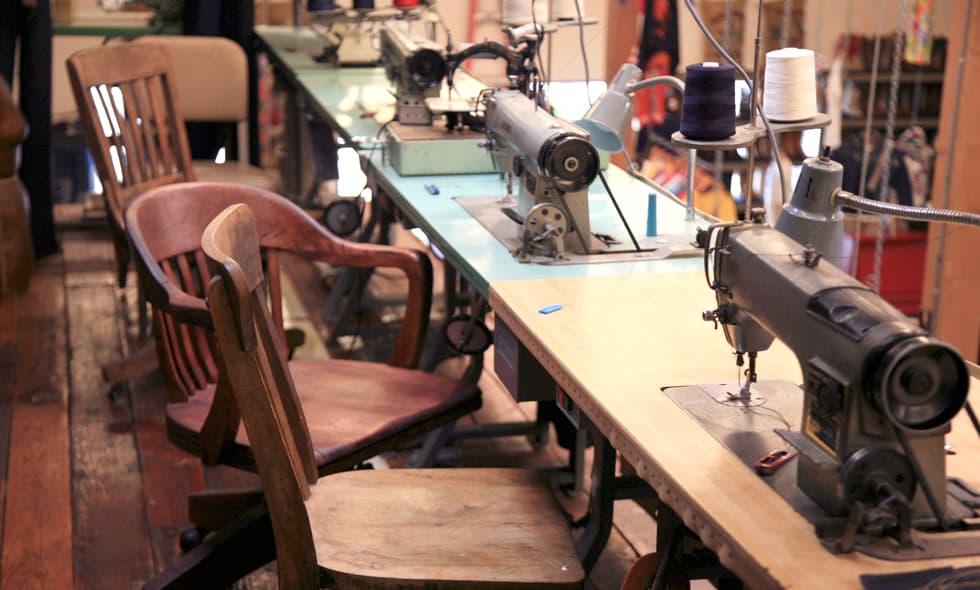
Upstairs is like a mad scientist den! The land of trials and errors. Lots of dead stock fabric rolls and swatches, books, archives, photos…. Several sewing machines to make protos. All the silk screening stuff we need for our small prod of in-house graphic Ts, etc…
There are large signs saying PRIVATE, KEEP OUT posted all over… but we get a lot of people trying to come upstairs to continue shopping, thinking all the machinery is part of a “display”! It actually is what it looks like: a work shop.
“ The attraction to Japan came later, early 90s, when I understood more about quality, craftsmanship and the importance of roots …
USA and Japan seem to be places you look too. Why is this?
As a kid born in France, I was dreaming in stars and stripes. Everything US for me was cool. That’s also one word that you can’t translate literally in any language. America gave birth to Cool.
Watching a movie 30 years ago had a real impact. You’d remember what you saw because going to a theatre was an event. I watched a lot of American classics growing up and those images are there to stay. Also a lot of French film noir with actors like Jean Gabin, Lino Ventura etc…
The attraction to Japan came later, early 90s, when I understood more about quality, craftsmanship and the importance of roots… I was also fortunate to hook up with Japanese masters SUGAR CANE Co (of Toyo Enterprise.) The relationship evolved in collaboration collections. Two a year. Designed by Mister Freedom® and Manufactured in Japan by Sugar Cane under the MFSC label. The folks there are experts at doing what they do, and have become friends over the years.
So I mix USA, France and Japan in what I do.
What’s been the biggest obstacle that you’ve had to overcome?
Something everyone is confronted to: surviving without compromising. If you write a hit song, you better be ready for the requests every time you go live. Something good, that you never regret, doesn’t have to be plebeian or a sell-out. But because your loved ones depend on you, you can only sleep on friend’s sofas and shine reality in your Rock’n’Roll years… Also, learning the rules of a game (ie. fashion) you don’t really like playing is challenging. Add to the mix the feeling of spending your life at work and you got TNT.
The right balance of all that is something I have yet to figure out.
What would you say to others who want to make/develop a product line?
I recently had some guy I never met message me on FaceBook, asking if I could support his new company by “sporting” eyewear he’s designing. That pissed me of. It’s the Audigier approach, repetition is reputation. Worked out well for him since he is a millionaire, but I approach things differently:
1) Create what you want to see/wear/hear.
2) Do it to the best of your abilities, so you have no regrets.
3) Cross your fingers that it works.
Also make sure you like what you’re getting into, because you are going to be doing a lot of it!
A big thanks to Christophe Loiron for answering our in-depth questions.
In the slideshow you can see some pictures of Christophe himself, the retail space, and also some snaps of the Mister Freedom products. For more information on Mister Freedom, click the link below.
www.misterfreedom.com
“The urge I have to make things, combined with the realisation that I didn’t see what I wanted to see around me, evolved into MF® as a clothing label.”